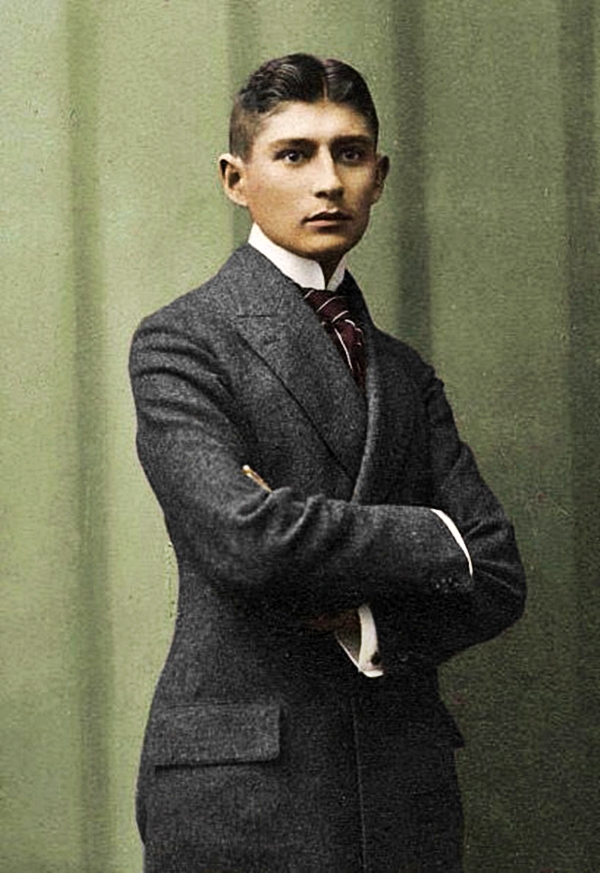
Franz Kafka

Tuesday, April 25, 2017

"A Tragic Actor" by Anton Chekhov, Full Text in English; from "The Schoolmistress and Other Stories" (1897) by Anton Pavlovich Chekhov

Young Chekhov (left) with brother Nikolai in 1882


A TRAGIC ACTOR

IT was the benefit night of Fenogenov, the tragic actor. They were
acting “Prince Serebryany.” The tragedian himself was playing Vyazemsky;
Limonadov, the stage manager, was playing Morozov; Madame Beobahtov,
Elena. The performance was a grand success. The tragedian accomplished
wonders indeed. When he was carrying off Elena, he held her in one hand
above his head as he dashed across the stage. He shouted, hissed, banged
with his feet, tore his coat across his chest. When he refused to fight
Morozov, he trembled all over as nobody ever trembles in reality, and
gasped loudly. The theatre shook with applause. There were endless
calls. Fenogenov was presented with a silver cigarette-case and a
bouquet tied with long ribbons. The ladies waved their handkerchiefs and
urged their men to applaud, many shed tears.... But the one who was
the most enthusiastic and most excited was Masha, daughter of Sidoretsky
the police captain. She was sitting in the first row of the stalls
beside her papa; she was ecstatic and could not take her eyes off the
stage even between the acts. Her delicate little hands and feet were
quivering, her eyes were full of tears, her cheeks turned paler and
paler. And no wonder--she was at the theatre for the first time in her
life.

“How well they act! how splendidly!” she said to her papa the police
captain, every time the curtain fell. “How good Fenogenov is!”

And if her papa had been capable of reading faces he would have read
on his daughter’s pale little countenance a rapture that was
almost anguish. She was overcome by the acting, by the play, by the
surroundings. When the regimental band began playing between the acts,
she closed her eyes, exhausted.

“Papa!” she said to the police captain during the last interval, “go
behind the scenes and ask them all to dinner to-morrow!”

The police captain went behind the scenes, praised them for all their
fine acting, and complimented Madame Beobahtov.

“Your lovely face demands a canvas, and I only wish I could wield the
brush!”

And with a scrape, he thereupon invited the company to dinner.

“All except the fair sex,” he whispered. “I don’t want the actresses,
for I have a daughter.”

Next day the actors dined at the police captain’s. Only three turned
up, the manager Limonadov, the tragedian Fenogenov, and the comic
man Vodolazov; the others sent excuses. The dinner was a dull affair.
Limonadov kept telling the police captain how much he respected him, and
how highly he thought of all persons in authority; Vodolazov mimicked
drunken merchants and Armenians; and Fenogenov (on his passport his name
was Knish), a tall, stout Little Russian with black eyes and frowning
brow, declaimed “At the portals of the great,” and “To be or not to
be.” Limonadov, with tears in his eyes, described his interview with the
former Governor, General Kanyutchin. The police captain listened, was
bored, and smiled affably. He was well satisfied, although Limonadov
smelt strongly of burnt feathers, and Fenogenov was wearing a hired
dress coat and boots trodden down at heel. They pleased his daughter and
made her lively, and that was enough for him. And Masha never took her
eyes off the actors. She had never before seen such clever, exceptional
people!

In the evening the police captain and Masha were at the theatre again.
A week later the actors dined at the police captain’s again, and after
that came almost every day either to dinner or supper. Masha became more
and more devoted to the theatre, and went there every evening.

She fell in love with the tragedian. One fine morning, when the police
captain had gone to meet the bishop, Masha ran away with Limonadov’s
company and married her hero on the way. After celebrating the wedding,
the actors composed a long and touching letter and sent it to the police
captain.

It was the work of their combined efforts.

“Bring out the motive, the motive!” Limonadov kept saying as he dictated
to the comic man. “Lay on the respect.... These official chaps like
it. Add something of a sort... to draw a tear.”

The answer to this letter was most discomforting. The police captain
disowned his daughter for marrying, as he said, “a stupid, idle Little
Russian with no fixed home or occupation.”

And the day after this answer was received Masha was writing to her
father.

“Papa, he beats me! Forgive us!”

He had beaten her, beaten her behind the scenes, in the presence of
Limonadov, the washerwoman, and two lighting men. He remembered how,
four days before the wedding, he was sitting in the London Tavern with
the whole company, and all were talking about Masha. The company were
advising him to “chance it,” and Limonadov, with tears in his
eyes urged: “It would be stupid and irrational to let slip such an
opportunity! Why, for a sum like that one would go to Siberia, let alone
getting married! When you marry and have a theatre of your own, take me
into your company. I shan’t be master then, you’ll be master.”

Fenogenov remembered it, and muttered with clenched fists:

“If he doesn’t send money I’ll smash her! I won’t let myself be made a
fool of, damn my soul!”

At one provincial town the company tried to give Masha the slip, but
Masha found out, ran to the station, and got there when the second bell
had rung and the actors had all taken their seats.

“I’ve been shamefully treated by your father,” said the tragedian; “all
is over between us!”

And though the carriage was full of people, she went down on her knees
and held out her hands, imploring him:

“I love you! Don’t drive me away, Kondraty Ivanovitch,” she besought
him. “I can’t live without you!”

They listened to her entreaties, and after consulting together, took
her into the company as a “countess”--the name they used for the minor
actresses who usually came on to the stage in crowds or in dumb parts.
To begin with Masha used to play maid-servants and pages, but when
Madame Beobahtov, the flower of Limonadov’s company, eloped, they made
her _ingenue_. She acted badly, lisped, and was nervous. She soon grew
used to it, however, and began to be liked by the audience. Fenogenov
was much displeased.

“To call her an actress!” he used to say. “She has no figure, no
deportment, nothing whatever but silliness.”

In one provincial town the company acted Schiller’s “Robbers.”
 Fenogenov played Franz, Masha, Amalie. The tragedian shouted and
quivered. Masha repeated her part like a well-learnt lesson, and the
play would have gone off as they generally did had it not been for
a trifling mishap. Everything went well up to the point where Franz
declares his love for Amalie and she seizes his sword. The tragedian
shouted, hissed, quivered, and squeezed Masha in his iron embrace. And
Masha, instead of repulsing him and crying “Hence!” trembled in his
arms like a bird and did not move,... she seemed petrified.

“Have pity on me!” she whispered in his ear. “Oh, have pity on me! I am
so miserable!”

“You don’t know your part! Listen to the prompter!” hissed the
tragedian, and he thrust his sword into her hand.

After the performance, Limonadov and Fenogenov were sitting in the
ticket box-office engaged in conversation.

“Your wife does not learn her part, you are right there,” the manager
was saying. “She doesn’t know her line.... Every man has his own
line,... but she doesn’t know hers....”

Fenogenov listened, sighed, and scowled and scowled.

Next morning, Masha was sitting in a little general shop writing:

“Papa, he beats me! Forgive us! Send us some money!”

Wednesday, April 12, 2017

"The Night Jasmine; Il Gelsomino Notturno," by Giovanni Pascoli. English translation, with original Italian text. "The Night Jasmine; Il Gelsomino Notturno," from the collection "Canti di Castelvecchio" (1903)


Giovanni Pascoli as a kid (on the right), with his father Ruggero and brothers Giacomo e Luigi

The following translation of "The Night Jasmine; Il Gelsomino Notturno," by Giovanni Pascoli, is from the book "The Poems of Giovanni Pascoli: Translated in English, with Original Italian Text," published by LiteraryJoint Press (2017). Also available as Amazon ebook (Free on Kindle Unlimited!)
 

       The Night Jasmine


   And the night flowers open up,
   the hour I think about my loved ones.
   Among the viburnum trees appeared
   the twilight butterflies.

   It's been a while already, since the cries subsided:
   over there a lone house whispers.
   Under the wings the nest is fast asleep,
   like eyes under eyelashes.

   From the open calyxes exudes
   the odor of red strawberries.
   Over there, in the sitting room a light shines.
   Grass is born on top of the graves.

   A late bee murmurs
   finding all taken the cells.
   (*) The hen-like constellation in the azure
   farmyard goes by with its chirping of stars.

   Over the entire night exudes
   the odor  that goes with the wind.
   It goes the light up the stairs;
   it flickers in the upper floor: it has gone off...

   Now it's dawn: a tad crumpled,
   the petals close; within the secret
   and soft receptacle is being conceived
   some new happiness still unknown.


(*) The stars cluster of the Pleiades in Italian is also nicknamed "Chioccetta" or "little broody hen."


 From the collection "Canti di Castelvecchio" (1903)


      Il Gelsomino Notturno


    E s’aprono i fiori notturni,
    nell’ora che penso ai miei cari.
    Sono apparse in mezzo ai viburni
    le farfalle crepuscolari.

    Da un pezzo si tacquero i gridi:
    là sola una casa bisbiglia.
    Sotto l’ali dormono i nidi,
    come gli occhi sotto le ciglia.

    Dai calici aperti si esala
    l’odore di fragole rosse.
    Splende un lume là nella sala.
    Nasce l’erba sopra le fosse.

    Un’ape tardiva sussurra
    trovando già prese le celle.
    La Chioccetta per l’aia azzurra
    va col suo pigolio di stelle.

    Per tutta la notte s’esala
    l’odore che passa col vento.
    Passa il lume su per la scala;
    brilla al primo piano: s’è spento...

    È l’alba: si chiudono i petali
    un poco gualciti; si cova,
    dentro l’urna molle e segreta,
    non so che felicità nuova.

    By Giovanni Pascoli, From the collection "Canti di Castelvecchio" (1903)
 

Saturday, April 8, 2017

"After the Theatre" by Anton Chekhov, Full Text in English; from "The Schoolmistress and Other Stories" (1897) by Anton Pavlovich Chekhov

 
Portrait of young Chekhov in country clothes
 
 
NADYA ZELENIN had just come back with her mamma from the theatre where
she had seen a performance of “Yevgeny Onyegin.” As soon as she reached
her own room she threw off her dress, let down her hair, and in her
petticoat and white dressing-jacket hastily sat down to the table to
write a letter like Tatyana’s.

“I love you,” she wrote, “but you do not love me, do not love me!”

She wrote it and laughed.

She was only sixteen and did not yet love anyone. She knew that an
officer called Gorny and a student called Gruzdev loved her, but now
after the opera she wanted to be doubtful of their love. To be unloved
and unhappy--how interesting that was. There is something beautiful,
touching, and poetical about it when one loves and the other is
indifferent. Onyegin was interesting because he was not in love at all,
and Tatyana was fascinating because she was so much in love; but if they
had been equally in love with each other and had been happy, they would
perhaps have seemed dull.

“Leave off declaring that you love me,” Nadya went on writing, thinking
of Gorny. “I cannot believe it. You are very clever, cultivated,
serious, you have immense talent, and perhaps a brilliant future awaits
you, while I am an uninteresting girl of no importance, and you know
very well that I should be only a hindrance in your life. It is true
that you were attracted by me and thought you had found your ideal in
me, but that was a mistake, and now you are asking yourself in despair:
‘Why did I meet that girl?’ And only your goodness of heart prevents you
from owning it to yourself....”

Nadya felt sorry for herself, she began to cry, and went on:

“It is hard for me to leave my mother and my brother, or I should take a
nun’s veil and go whither chance may lead me. And you would be left free
and would love another. Oh, if I were dead!”

She could not make out what she had written through her tears; little
rainbows were quivering on the table, on the floor, on the ceiling, as
though she were looking through a prism. She could not write, she sank
back in her easy-chair and fell to thinking of Gorny.

My God! how interesting, how fascinating men were! Nadya recalled the
fine expression, ingratiating, guilty, and soft, which came into the
officer’s face when one argued about music with him, and the effort he
made to prevent his voice from betraying his passion. In a society where
cold haughtiness and indifference are regarded as signs of good breeding
and gentlemanly bearing, one must conceal one’s passions. And he did
try to conceal them, but he did not succeed, and everyone knew very well
that he had a passionate love of music. The endless discussions about
music and the bold criticisms of people who knew nothing about it kept
him always on the strain; he was frightened, timid, and silent. He
played the piano magnificently, like a professional pianist, and if he
had not been in the army he would certainly have been a famous musician.

The tears on her eyes dried. Nadya remembered that Gorny had declared
his love at a Symphony concert, and again downstairs by the hatstand
where there was a tremendous draught blowing in all directions.

“I am very glad that you have at last made the acquaintance of Gruzdev,
our student friend,” she went on writing. “He is a very clever man, and
you will be sure to like him. He came to see us yesterday and stayed
till two o’clock. We were all delighted with him, and I regretted that
you had not come. He said a great deal that was remarkable.”

Nadya laid her arms on the table and leaned her head on them, and her
hair covered the letter. She recalled that the student, too, loved her,
and that he had as much right to a letter from her as Gorny. Wouldn’t it
be better after all to write to Gruzdev? There was a stir of joy in her
bosom for no reason whatever; at first the joy was small, and rolled
in her bosom like an india-rubber ball; then it became more massive,
bigger, and rushed like a wave. Nadya forgot Gorny and Gruzdev; her
thoughts were in a tangle and her joy grew and grew; from her bosom it
passed into her arms and legs, and it seemed as though a light, cool
breeze were breathing on her head and ruffling her hair. Her shoulders
quivered with subdued laughter, the table and the lamp chimney shook,
too, and tears from her eyes splashed on the letter. She could not
stop laughing, and to prove to herself that she was not laughing about
nothing she made haste to think of something funny.

“What a funny poodle,” she said, feeling as though she would choke with
laughter. “What a funny poodle!”

She thought how, after tea the evening before, Gruzdev had played with
Maxim the poodle, and afterwards had told them about a very intelligent
poodle who had run after a crow in the yard, and the crow had looked
round at him and said: “Oh, you scamp!”

The poodle, not knowing he had to do with a learned crow, was fearfully
confused and retreated in perplexity, then began barking....

“No, I had better love Gruzdev,” Nadya decided, and she tore up the
letter to Gorny.

She fell to thinking of the student, of his love, of her love; but the
thoughts in her head insisted on flowing in all directions, and she
thought about everything--about her mother, about the street, about the
pencil, about the piano.... She thought of them joyfully, and felt
that everything was good, splendid, and her joy told her that this was
not all, that in a little while it would be better still. Soon it would
be spring, summer, going with her mother to Gorbiki. Gorny would come
for his furlough, would walk about the garden with her and make love
to her. Gruzdev would come too. He would play croquet and skittles with
her, and would tell her wonderful things. She had a passionate longing
for the garden, the darkness, the pure sky, the stars. Again her
shoulders shook with laughter, and it seemed to her that there was a
scent of wormwood in the room and that a twig was tapping at the window.

She went to her bed, sat down, and not knowing what to do with the
immense joy which filled her with yearning, she looked at the holy image
hanging at the back of her bed, and said:

“Oh, Lord God! Oh, Lord God!”

Sunday, April 2, 2017

"The Hour of Barga; L'ora di Barga," by Giovanni Pascoli. English translation, with original Italian text. "L'ora di Barga," from the collection "Canti di Castelvecchio" (1903)


View of Barga, north of the provincial capital, Lucca, Italy.

The Poems of Giovanni Pascoli, Translated in English, next to their Original Italian Text. Giovanni Pascoli (b. at San Mauro Romagna, December 31, 1855, d. at Barga April 6, 1912) was a classical scholar and one of the greatest European poets of his times. The work of Giovanni Pascoli is considered the beginning of modern Italian poetry. Amidst the thick fog, in the rough seas and the rugged shores of a country divided by historic, cultural, and linguistic barriers, Pascoli become the lighthouse to point to, in order to find a common language and a way to unity. In appearance, he often simply spoke of “little things:” bucolic scenes, small images of nature, peasants and their everyday chores; even animals, birds, plants, and flowers with mystical names found their cozy spot under the beaming sun of Pascoli’s marvelous pen.

The following translation of "The Hour of Barga; L'ora di Barga," by Giovanni Pascoli, is from the book "The Poems of Giovanni Pascoli: Translated in English, with Original Italian Text," published by LiteraryJoint Press (2017). Also available as Amazon ebook (Free on Kindle Unlimited!)


The Hour of Barga


In my little nook, where I hear nothing
but the murmur of the wheat's stems,
the sound of the hours comes with the wind
from the unseen hamlet in the mountains:
a sound that equally and lightly falls,
like a persuading voice.

You say, It's time, you say, It's late,
a mild voice that from the sky descends.
Yet, let me look a bit more at
the tree, the spider, the bee, the stem,
things that are many centuries, or a year,
or an hour old, and at those clouds that disappear.

Let me remain here still
amongst much movements of wings and branches;
and listen to the rooster that from a farm calls,
and to another one, that from another answers,
and, when elsewhere settled is the soul,
to the shrieks of a chickadee that brawls.


And then again the hour chimes, and sends me
first one of its cry of tinkling
wonder, then the same mild
voice of before is advising,
and deep, deep, deep, encourages me:
it tells me, It's late; it tells me, It's time.

Then you want me to think about the comeback,
voice that falls lightly from the sky!
Yet, how pretty is this little of day that is left
and shines as if through a voile!
I know it's time, I know it's late;
let me look on a bit longer, still.

Let me look within my soul,
let that in my past I live;
if only on the dry twig my flower lived on,
if only I found a kiss that I did not give!
In my little nook of shadowy exile
let me lament upon my own life!

And then again the hour chimes, and shrills
two times a cry of anguish, seemingly,
and then, back again mild and tranquil,
in my nook it persuades me:
it's late! it's time. Yes, let's go back where
those who love and whom I love dwell.


L'Ora di Barga


Al mio cantuccio, donde non sento
se non le reste brusir del grano,
il suon dell’ore viene col vento
dal non veduto borgo montano:
suono che uguale, che blando cade,
come una voce che persuade.

Tu dici, È l’ora, tu dici, È tardi,
voce che cadi blanda dal cielo.
Ma un poco ancora lascia che guardi
l’albero, il ragno, l’ape, lo stelo,
cose ch’han molti secoli o un anno
o un’ora, e quelle nubi che vanno.

Lasciami immoto qui rimanere
fra tanto moto d’ale e di fronde;
e udire il gallo che da un podere
chiama, e da un altro l’altro risponde,
e, quando altrove l’anima è fissa,
gli strilli d’una cincia che rissa.

E suona ancora l’ora, e mi manda
prima un suo grido di meraviglia
tinnulo, e quindi con la sua blanda
voce di prima parla e consiglia,
e grave grave grave m’incuora:
mi dice, È tardi; mi dice, È l’ora.

Tu vuoi che pensi dunque al ritorno,
voce che cadi blanda dal cielo!
Ma bello è questo poco di giorno
che mi traluce come da un velo!
Lo so ch’è l’ora, lo so ch’è tardi;
ma un poco ancora lascia che guardi.

Lascia che guardi dentro il mio cuore,
lascia ch’io viva del mio passato;
se c’è sul bronco sempre quel fiore,
s’io trovi un bacio che non ho dato!
Nel mio cantuccio d’ombra romita
lascia ch’io pianga su la mia vita!

E suona ancora l’ora, e mi squilla
due volte un grido quasi di cruccio,
e poi, tornata blanda e tranquilla,
mi persuade nel mio cantuccio:
è tardi! è l’ora! Sì, ritorniamo
dove son quelli ch’amano ed amo.


From the collection “Canti di Castelvecchio(1903)” 


Saturday, March 25, 2017

"The Beauties" by Anton Chekhov, Full Text in English; from "The Schoolmistress and Other Stories" (1897) by Anton Pavlovich Chekhov


Portrait of Anton Pavlovich Chekhov

THE BEAUTIES

I

I REMEMBER, when I was a high school boy in the fifth or sixth class, I
was driving with my grandfather from the village of Bolshoe Kryepkoe in
the Don region to Rostov-on-the-Don. It was a sultry, languidly dreary
day of August. Our eyes were glued together, and our mouths were parched
from the heat and the dry burning wind which drove clouds of dust to
meet us; one did not want to look or speak or think, and when our drowsy
driver, a Little Russian called Karpo, swung his whip at the horses
and lashed me on my cap, I did not protest or utter a sound, but only,
rousing myself from half-slumber, gazed mildly and dejectedly into the
distance to see whether there was a village visible through the dust.
We stopped to feed the horses in a big Armenian village at a rich
Armenian’s whom my grandfather knew. Never in my life have I seen a
greater caricature than that Armenian. Imagine a little shaven head with
thick overhanging eyebrows, a beak of a nose, long gray mustaches, and
a wide mouth with a long cherry-wood chibouk sticking out of it. This
little head was clumsily attached to a lean hunch-back carcass attired
in a fantastic garb, a short red jacket, and full bright blue trousers.
This figure walked straddling its legs and shuffling with its slippers,
spoke without taking the chibouk out of its mouth, and behaved with
truly Armenian dignity, not smiling, but staring with wide-open eyes and
trying to take as little notice as possible of its guests.

There was neither wind nor dust in the Armenian’s rooms, but it was just
as unpleasant, stifling, and dreary as in the steppe and on the road.
I remember, dusty and exhausted by the heat, I sat in the corner on a
green box. The unpainted wooden walls, the furniture, and the floors
colored with yellow ocher smelt of dry wood baked by the sun. Wherever
I looked there were flies and flies and flies.... Grandfather and the
Armenian were talking about grazing, about manure, and about oats....
I knew that they would be a good hour getting the samovar; that
grandfather would be not less than an hour drinking his tea, and then
would lie down to sleep for two or three hours; that I should waste a
quarter of the day waiting, after which there would be again the heat,
the dust, the jolting cart. I heard the muttering of the two voices, and
it began to seem to me that I had been seeing the Armenian, the cupboard
with the crockery, the flies, the windows with the burning sun beating
on them, for ages and ages, and should only cease to see them in the
far-off future, and I was seized with hatred for the steppe, the sun,
the flies....

A Little Russian peasant woman in a kerchief brought in a tray of
tea-things, then the samovar. The Armenian went slowly out into the
passage and shouted: “Mashya, come and pour out tea! Where are you,
Mashya?”

Hurried footsteps were heard, and there came into the room a girl of
sixteen in a simple cotton dress and a white kerchief. As she washed the
crockery and poured out the tea, she was standing with her back to me,
and all I could see was that she was of a slender figure, barefooted,
and that her little bare heels were covered by long trousers.

The Armenian invited me to have tea. Sitting down to the table, I
glanced at the girl, who was handing me a glass of tea, and felt all at
once as though a wind were blowing over my soul and blowing away all
the impressions of the day with their dust and dreariness. I saw the
bewitching features of the most beautiful face I have ever met in real
life or in my dreams. Before me stood a beauty, and I recognized that at
the first glance as I should have recognized lightning.

I am ready to swear that Masha--or, as her father called her,
Mashya--was a real beauty, but I don’t know how to prove it. It
sometimes happens that clouds are huddled together in disorder on the
horizon, and the sun hiding behind them colors them and the sky with
tints of every possible shade--crimson, orange, gold, lilac, muddy pink;
one cloud is like a monk, another like a fish, a third like a Turk in a
turban. The glow of sunset enveloping a third of the sky gleams on
the cross on the church, flashes on the windows of the manor house, is
reflected in the river and the puddles, quivers on the trees; far, far
away against the background of the sunset, a flock of wild ducks is
flying homewards.... And the boy herding the cows, and the surveyor
driving in his chaise over the dam, and the gentleman out for a walk,
all gaze at the sunset, and every one of them thinks it terribly
beautiful, but no one knows or can say in what its beauty lies.

Saturday, March 18, 2017

"Elf Söhne, Eleven Sons" by Franz Kafka: English version. "Elf Söhne, Eleven Sons" by Franz Kafka, translated in English, with Original Text in German


Portrait of Franz Kafka

Eleven Sons


I have eleven sons. The first is outwardly very unappealing, but serious and clever; nevertheless, I do not have the highest appreciation of him, although I love him as much as the others. His way of thinking seems too simple to me. He does not look right nor left, nor into the distance; in his little circle of thoughts, he runs constantly around, or he rotates, rather.
The second is handsome, slim, well-built; it is a delight to see him in fencing posture. He is also  wise, but also worldly wise; he has seen a lot, therefore it seems that the character of his country is impressed in him no less than within the folks back home. But this advantage is certainly not only due to his traveling, it belongs rather to the inimitable nature of this child, who is recognized by anyone who wants to imitate his dives into the water and the somersaults, impetuous yet well controlled. Until the end of the springboard the courage and desire is for the imitators enough, but then, instead of jumping, they raise their arms apologetically. And despite all this (I should really be happy about such a child) my relationship with him is not untarnished. His left eye is a little smaller than the right, winking much; a little fault, certainly, making his face even more daring than it would otherwise be, and no one will disapprove of this smaller twinkling eye, in view of the unapproachable independence of his temper. I, the father, do it. Of course it's not this physical fault that hurts me, but a somehow corresponding small irregularity of his mind, a sort of poison erring in his blood, some inability, only visible to me, marks his life all around. On the other hand, this is precisely what makes him my true son, because his fault is at the same time the very fault of our whole family, and in this son is just more evident.
The third son is also handsome, but it's not the handsomeness that I like. It is the handsomeness of the singer: the curved mouth; the dreamy eye; the head which requires, to work, a drapery behind; the chest swells too much; slightly colliding hands that fall too easily, the legs stand out because they can not bear him. And besides: the tone of his voice is not full; for a moment it deceives the connoisseur's ear, but then it is shortlived. Although everything would tempt to make this son flaunting, I hold him preferably in secret; he does not impose himself, not because he knows his own flaws, but rather out of innocence. He also feels that he does not belong to our times; as if he belonged to my family, but also to another, forever lost, he is often listless and nothing can cheer him up.
My fourth son is perhaps the friendliest of all. A true child of his time, everybody understands him, he shares common ground with everyone, and all try to nod to him. Perhaps by this general recognition he gains some lightness, and his movements some freedom, his judgment is lighthearted. Some of his sayings you want to repeat often, but only some, because all in all he suffers  of too great easiness. He is like a man who jumps off admirably, swallowing the air, but ends bleakly in barren dust, a nothingness. Such thoughts embitter me at the sight of this child.
The fifth son is kind and good; promised a lot less than he thought; he was so insignificant that in his presence one felt alone; it has yet brought to some renown. If you asked me how this is done, I could barely answer. Perhaps, innocence penetrates effortlessly through the raging elements in this world, and he's innocent. Perhaps too innocent. Friendly to everyone. Perhaps too friendly. I confess: I will not be comfortable if you praise him before me. This is to say, it is somewhat too easy to praise someone who is obviously so praiseworthy, like my son.
My sixth son seems, at least at first glance, the most profound of all. Crestfallen and yet garrulous. Therefore, one does not easily come to him. Being subject to falling, he falls into invincible sadness; he attains the overweight, so he preserves it by chatter. But I'm not talking to him from some absent-minded passion; in broad day he often fights his way through his thoughts like in a dream. Without being sick - rather, it has a very good health - he stumbles sometimes, particularly at dusk, but does not need help, he does not fall. Perhaps it is his own physical development to blame, for he is much too big for his age. This makes him unattractive as a whole, despite strikingly beautiful details, such as his hands and feet. Not pretty is also his forehead; somewhat shriveled both in the skin and in the bone formation.
The seventh son belongs to me more than all the others. The world does not understand him enough; his special kind of humor  is not understood. I do not overesteem him; I know he is barely sufficient; had the world no other fault than not to appreciate him, then it would still be spotless. But within the family, I would never want to miss this son. Both restlessness and reverence for tradition he brings, and both he add together, at least to my mind, to an incontestable whole. Of this whole he knows, to some extent, what to do; the wheel of the future he will not put in motion, but his disposition is so encouraging, so full of hope; I wish he had children, and they children again. Unfortunately, this desire does not seem to be likely fulfilled. In a somehow understandable, but equally undesirable, complacency, which is, however, in great contrast to the general judgment, he goes about alone, not caring about girls, and is still never losing his good mood.
My eighth son is my problem child, and I do not actually know the reason for this. He looks at me strange, and I feel a close fatherly bond with him. Time has worked well its way,  but before I would sometimes feel a shiver when thinking about him. He goes his own way; he has broken all the ties with me; and certainly with his strong head, his small athletic body - only his legs were rather weak as a boy, but they might have in the meantime strenghtened - gets away as he pleases. I often felt like calling him, to ask him how he is really doing, why he secluded so much from his father,  and what he actually meant, but now he's so far and so much time has already passed; now it may as well remain as it is. I hear that he is the only one amongst my sons to  wear a beard; which is obviously not too good for such a small man.
My ninth son is very elegant and has that particular sweet look, according to women. So sweet that he can even seduce at times, but I know that a wet sponge is sufficient to wipe out all that unearthly splendor. What is special about this boy, however, is that he does not at all intend to seduce; to him it would be enough to lie his all life on the sofa, direct his look at the ceiling,  or even more let it rest under the eyelids. Is such a favorite position of his, he likes to talk and not badly; profusely and vividly; but only within narrow limits; if he goes beyond them, which can not be avoided in such narrowness, his speech is completely empty. One would wink at him, if only hoped that such sleepy look could notice it. 
My tenth son is regarded as an insincere character. I do not want to either quite deny, nor quite confirm this fault. What is certain is that whoever sees him coming by, in such solemnity that is well above his age, in an always firmly closed frock coat, in the old, but impeccably polished, black hat, his impassible face, the slightly protruding chin, the eyelids gravely bulging over his eyes, two fingers  sometimes put to his mouth one who sees him must think: there is a boundless hypocrite! But, now you just hear him speak! Knowledgeable; full of wisdom; of few words;  responding with mischievous vivaciousness to questions; in astonishing,  evident and joyful conformity with the whole world; a conformity that necessarily tightens the neck and can lift the body. Many who thought themselves very clever and, for this reason, felt repelled by his appearance, he has by his word strongly attracted. But there are also people, indifferent at his appearance, to whom his words appear hypocritical. I, as a father, do not want to decide here, but I must admit that the latter judgement is in any case as noteworthy as the former. 
My eleventh son is tender, probably the weakest among my sons; but deceptive in his weakness; he can be strong and determined at times, even though his weakness is somehow foundamental. However, it is not a shameful weakness, rather something that only appears on our world as a weakness. It is not then, for example, also the readiness to set to fly a weakness, because it is indeed wavering and uncertain and fluttery? Something like this shows my son. The father, of course, is not happy about such features; they obviously contribute to the destruction of the family. Sometimes he looks at me as if to say: “I'll take you with me, Father.” Then I think: “You're the last person I trust myself.” And his eyes again seem to say again: “At least, may I then be the last.”
 These are the eleven sons.

From "The Tales of Franz Kafka: English Translation With Original Text In German," available as e-book on Amazon KindleiPhone, iPad, or iPod touchon NOOK Bookon Kobo, and as printed, traditional edition through Lulu.

Original Text in German:


Elf Söhne


Ich habe elf Söhne.
Der erste ist äußerlich sehr unansehnlich, aber ernsthaft und klug; trotzdem schätze ich ihn, wiewohl ich ihn als Kind wie alle andern liebe, nicht sehr hoch ein. Sein Denken scheint mir zu einfach. Er sieht nicht rechts noch links und nicht in die Weite; in seinem kleinen Gedankenkreis läuft er immerfort rundum oder dreht sich vielmehr.
Der zweite ist schön, schlank, wohlgebaut; es entzückt, ihn in Fechterstellung zu sehen. Auch er ist klug, aber überdies welterfahren; er hat viel gesehen, und deshalb scheint selbst die heimische Natur vertrauter mit ihm zu sprechen als mit den Daheimgebliebenen. Doch ist gewiß dieser Vorzug nicht nur und nicht einmal wesentlich dem Reisen zu verdanken, er gehört vielmehr zu dem Unnachahmlichen dieses Kindes, das zum Beispiel von jedem anerkannt wird, der etwa seinen vielfach sich überschlagenden und doch geradezu wild beherrschten Kunstsprung ins Wasser ihm nachmachen will. Bis zum Ende des Sprungbrettes reicht der Mut und die Lust, dort aber statt zu springen, setzt sich plötzlich der Nachahmer und hebt entschuldigend die Arme. - Und trotz dem allen (ich sollte doch eigentlich glücklich sein über ein solches Kind) ist mein Verhältnis zu ihm nicht ungetrübt. Sein linkes Auge ist ein wenig kleiner als das rechte und zwinkert viel; ein kleiner Fehler nur, gewiß, der sein Gesicht sogar noch verwegener macht als es sonst gewesen wäre, und niemand wird gegenüber der unnahbaren Abgeschlossenheit seines Wesens dieses kleinere zwinkernde Auge tadelnd bemerken. Ich, der Vater, tue es. Es ist natürlich nicht dieser körperliche Fehler, der mir weh tut, sondern eine ihm irgendwie entsprechende kleine Unregelmäßigkeit seines Geistes, irgendein in seinem Blut irrendes Gift, irgendeine Unfähigkeit, die mir allein sichtbare Anlage seines Lebens rund zu vollenden. Gerade dies macht ihn allerdings andererseits wieder zu meinem wahren Sohn, denn dieser sein Fehler ist gleichzeitig der Fehler unserer ganzen Familie und an diesem Sohn nur überdeutlich.
Der dritte Sohn ist gleichfalls schön, aber es ist nicht die Schönheit, die mir gefällt. Es ist die Schönheit des Sängers: der geschwungene Mund; das träumerische Auge; der Kopf, der eine Draperie hinter sich benötigt, um zu wirken; die unmäßig sich wölbende Brust; die leicht auffahrenden und viel zu leicht sinkenden Hände, die Beine, die sich zieren, weil sie nicht tragen können. Und überdies: der Ton seiner Stimme ist nicht voll; trügt einen Augenblick; läßt den Kenner aufhorchen; veratmet aber kurz darauf. - Trotzdem im allgemeinen alles verlockt, diesen Sohn zur Schau zu stellen, halte ich ihn doch am liebsten im Verborgenen; er selbst drängt sich nicht auf, aber nicht etwa deshalb, weil er seine Mängel kennt, sondern aus Unschuld. Auch fühlt er sich fremd in unserer Zeit; als gehöre er zwar zu meiner Familie, aber überdies noch zu einer andern, ihm für immer verlorenen, ist er oft unlustig und nichts kann ihn aufheitern.
Mein vierter Sohn ist vielleicht der umgänglichste von allen. Ein wahres Kind seiner Zeit, ist er jedermann verständlich, er steht auf dem allen gemeinsamen Boden und jeder ist versucht, ihm zuzunicken. Vielleicht durch diese allgemeine Anerkennung gewinnt sein Wesen etwas Leichtes, seine Bewegungen etwas Freies, seine Urteile etwas Unbekümmertes. Manche seiner Aussprüche möchte man oft wiederholen, allerdings nur manche, denn in seiner Gesamtheit krankt er doch wieder an allzu großer Leichtigkeit. Er ist wie einer, der bewundernswert abspringt, schwalbengleich die Luft teilt, dann aber doch trostlos im öden Staube endet, ein Nichts. Solche Gedanken vergällen mir den Anblick dieses Kindes.
Der fünfte Sohn ist lieb und gut; versprach viel weniger, als er hielt; war so unbedeutend, daß man sich förmlich in seiner Gegenwart allein fühlte; hat es aber doch zu einigem Ansehen gebracht. Fragte man mich, wie das geschehen ist, so könnte ich kaum antworten. Unschuld dringt vielleicht doch noch am leichtesten durch das Toben der Elemente in dieser Welt, und unschuldig ist er. Vielleicht allzu unschuldig. Freundlich zu jedermann. Vielleicht allzu freundlich. Ich gestehe: mir wird nicht wohl, wenn man ihn mir gegenüber lobt. Es heißt doch, sich das Loben etwas zu leicht zu machen, wenn man einen so offensichtlich Lobenswürdigen lobt, wie es mein Sohn ist.
Mein sechster Sohn scheint, wenigstens auf den ersten Blick, der tiefsinnigste von allen. Ein Kopfhänger und doch ein Schwatzer. Deshalb kommt man ihm nicht leicht bei. Ist er am Unterliegen, so verfällt er in unbesiegbare Traurigkeit; erlangt er das Übergewicht, so wahrt er es durch Schwätzen. Doch spreche ich ihm eine gewisse selbstvergessene Leidenschaft nicht ab; bei hellem Tag kämpft er sich oft durch das Denken wie im Traum. Ohne krank zu sein - vielmehr hat er eine sehr gute Gesundheit - taumelt er manchmal, besonders in der Dämmerung, braucht aber keine Hilfe, fällt nicht. Vielleicht hat an dieser Erscheinung seine körperliche Entwicklung schuld, er ist viel zu groß für sein Alter. Das macht ihn unschön im Ganzen, trotz auffallend schöner Einzelheiten, zum Beispiel der Hände und Füße. Unschön ist übrigens auch seine Stirn; sowohl in der Haut als in der Knochenbildung irgendwie verschrumpft.
Der siebente Sohn gehört mir vielleicht mehr als alle andern. Die Welt versteht ihn nicht zu würdigen; seine besondere Art von Witz versteht sie nicht. Ich überschätze ihn nicht; ich weiß, er ist geringfügig genug; hätte die Welt keinen anderen Fehler als den, daß sie ihn nicht zu würdigen weiß, sie wäre noch immer makellos. Aber innerhalb der Familie wollte ich diesen Sohn nicht missen. Sowohl Unruhe bringt er, als auch Ehrfurcht vor der Überlieferung, und beides fügt er, wenigstens für mein Gefühl, zu einem unanfechtbaren Ganzen. Mit diesem Ganzen weiß er allerdings selbst am wenigsten, etwas anzufangen; das Rad der Zukunft wird er nicht ins Rollen bringen, aber diese seine Anlage ist so aufmunternd, so hoffnungsreich; ich wollte, er hätte Kinder und diese wieder Kinder. Leider scheint sich dieser Wunsch nicht erfüllen zu wollen. In einer mir zwar begreiflichen, aber ebenso unerwünschten Selbstzufriedenheit, die allerdings in großartigem Gegensatz zum Urteil seinerUmgebung steht, treibt er sich allein umher, kümmert sich nicht um Mädchen und wird trotzdem niemals seine gute Laune verlieren.
Mein achter Sohn ist mein Schmerzenskind, und ich weiß eigentlich keinen Grund dafür. Er sieht mich fremd an, und ich fühle mich doch väterlich eng mit ihm verbunden. Die Zeit hat vieles gut gemacht; früher aber befiel mich manchmal ein Zittern, wenn ich nur an ihn dachte. Er geht seinen eigenen Weg; hat alle Verbindungen mit mir abgebrochen; und wird gewiß mit seinem harten Schädel, seinem kleinen athletischen Körper - nur die Beine hatte er als Junge recht schwach, aber das mag sich inzwischen schon ausgeglichen haben - überall durchkommen, wo es ihm beliebt. Öfters hatte ich Lust, ihn zurückzurufen, ihn zu fragen, wie es eigentlich um ihn steht, warum er sich vom Vater so abschließt und was er im Grunde beabsichtigt, aber nun ist er so weit und so viel Zeit ist schon vergangen, nun mag es so bleiben wie es ist. Ich höre, daß er als der einzige meiner Söhne einen Vollbart trägt; schön ist das bei einem so kleinen Mann natürlich nicht.
Mein neunter Sohn ist sehr elegant und hat den für Frauen bestimmten süßen Blick. So süß, daß er bei Gelegenheit sogar mich verführen kann, der ich doch weiß, daß förmlich ein nasser Schwamm genügt, um allen diesen überirdischen Glanz wegzuwischen. Das Besondere an diesem Jungen aber ist, daß er gar nicht auf Verführung ausgeht; ihm würde es genügen, sein Leben lang auf dem Kanapee zu liegen und seinen Blick an die Zimmerdecke zu verschwenden oder noch viel lieber ihn unter den Augenlidern ruhen zu lassen. Ist er in dieser von ihm bevorzugten Lage, dann spricht er gern und nicht übel; gedrängt und anschaulich; aber doch nur in engen Grenzen; geht er über sie hinaus, was sich bei ihrer Enge nicht vermeiden läßt, wird sein Reden ganz leer. Man würde ihm abwinken, wenn man Hoffnung hätte, daß dieser mit Schlaf gefüllte Blick es bemerken könnte.
Mein zehnter Sohn gilt als unaufrichtiger Charakter. Ich will diesen Fehler nicht ganz in Abrede stellen, nicht ganz bestätigen. Sicher ist, daß, wer ihn in der weit über sein Alter hinausgehenden Feierlichkeit herankommen sieht, im immer festgeschlossenen Gehrock, im alten, aber übersorgfältig geputzten schwarzen Hut, mit dem unbewegten Gesicht, dem etwas vorragenden Kinn, den schwer über die Augen sich wölbenden Lidern, den manchmal an den Mund geführten zwei Fingern - wer ihn so sieht, denkt: das ist ein grenzenloser Heuchler. Aber, nun höre man ihn reden! Verständig; mit Bedacht; kurz angebunden; mit boshafter Lebendigkeit Fragen durchkrenzend; in erstaunlicher, selbstverständlicher und froher Übereinstimmung mit dem Weltganzen; eine Übereinstimmung, die notwendigerweise den Hals strafft und den Körper erheben läßt. Viele, die sich sehr klug dünken und die sich, aus diesem Grunde wie sie meinten, von seinem Äußern abgestoßen fühlten, hat er durch sein Wort stark angezogen. Nun gibt es aber wieder Leute, die sein Äußeres gleichgültig läßt, denen aber sein Wort heuchlerisch erscheint. Ich, als Vater, will hier nicht entscheiden, doch muß ich eingestehen, daß die letzteren Beurteiler jedenfalls beachtenswerter sind als die ersteren.
Mein elfter Sohn ist zart, wohl der schwächste unter meinen Söhnen; aber täuschend in seiner Schwäche; er kann nämlich zu Zeiten kräftig und bestimmt sein, doch ist allerdings selbst dann die Schwäche irgendwie grundlegend. Es ist aber keine beschämende Schwäche, sondern etwas, das nur auf diesem unsern Erdboden als Schwäche erscheint. Ist nicht zum Beispiel auch Flugbereitschaft Schwäche, da sie doch Schwanken und Unbestimmtheit und Flattern ist? Etwas Derartiges zeigt mein Sohn. Den Vater freuen natürlich solche Eigenschaften nicht; sie gehen ja offenbar auf Zerstörung der Familie aus. Manchmal blickt er mich an, als wollte er mir sagen: 'Ich werde dich mitnehmen, Vater.' Dann denke ich: 'Du wärst der Letzte, dem ich mich vertraue.' Und sein Blick scheint wieder zu sagen: 'Mag ich also wenigstens der Letzte sein.'
Das sind die elf Söhne.


Friday, March 17, 2017

"Schakale und Araber, Jackals and Arabs" by Franz Kafka: English version. "Schakale und Araber, Jackals and Arabs" by Franz Kafka, translated in English, with Original Text in German

Franz Kafka at age 5  (1888)

The following is an excerpt from "The Tales of Franz Kafka: English Translation With Original Text In German," available as e-book on Amazon KindleiPhone, iPad, or iPod touchon NOOK Bookon Kobo, and as printed, traditional edition through Lulu.  


Jackals and Arabs


"...We were camping in the oasis. My companions were asleep. An Arab, tall and white, went past me; he had tended to his camels and was going to his sleeping place.
I threw myself on my back on the grass; I wanted to sleep; I couldn’t; the howling of a jackal in the distance; I sat up straight again. And what had been so far away was suddenly close by. A multitude of jackals around me; their eyes flashing dull gold and then extinguishing; lean bodies moving in a nimble, coordinated manner, as if responding to a whip.
One of them came from behind, pushed himself under my arm, right against me, as if it needed my warmth, then stepped in front of me and spoke, almost eye to eye with me:
“I’m the oldest jackal far and wide. I’m happy that I’m still able to welcome you here. I had almost given up hope, for we’ve been waiting for you an infinitely long time. My mother waited, and her mother, and all her mothers, right back to the mother of all jackals. Believe it!”

“That surprises me,” I said, forgetting to light the pile of wood which laid ready to keep the jackals away with its smoke, “That surprises me to hear. Only by chance I’ve come from the high north and I meant to be just in a short trip. What do you jackals want then?”
As if encouraged by this, perhaps too friendly, conversation they drew their circle more closely around me, all of them panting and snarling.
“We know,” the oldest began, “that you come from the north, and on that alone rests our hope. In the north there is a way of understanding things, that one cannot find here among the Arabs. From their cool arrogance, you know, one cannot beat a spark of common sense. They kill animals to eat them, and they disregard the carcasses.”
“Don’t speak so loud,” I said, “there are Arabs sleeping close by.”
“You really are a stranger,” said the jackal, “otherwise you would know that throughout the history of the world a jackal has never yet feared an Arab. Should we fear them? Is it not misfortune enough that we have been outcasted under such people?”
“Maybe, maybe,” I said. “I’m not up to judging things which are so far from me; it seems to be a very old fight; it’s probably in the blood and so, perhaps, will only end with blood.”
“You are very clever,” said the old jackal; and they all breathed even more quickly, with harried lungs, although they were standing still; a bitter smell, which I could temporarily bear only by clenching my teeth, emanated from their open mouths. “You are very clever. What you said corresponds to our ancient doctrine. So we take their blood, and the fight is over.”
“Oh,” I said, in a wilder manner than I intended, “they’ll defend themselves. They’ll shoot you down in droves with their guns.” “You misunderstand us,” he said, “a trait of human beings which has not disappeared, not even in the high north. We are not going to kill them. The Nile does not have enough water to wash us clean. At the mere sight of their living bodies, we immediately run away into cleaner air, into the desert, that is therefore our home.”
 All the jackals around, including many more that in the meantime had joined coming from afar, lowered their heads between the forelegs and wiped them with their paws; it was as if they wanted to conceal an aversion, which was so dreadful that I would have much preferred to escape beyond their circle with a high jump.

 “So what do you intend to do?” I asked. I wanted to stand up, but I couldn’t; two young animals were holding me firmly from behind, biting my jacket and shirt. I had to remain seated. “They are holding your train,” said the old jackal seriously, by way of explanation, “a sign of respect.”
 “They should let me go,” I cried out, turning now to the old one, now to the young ones. “They will, of course,” said the old one, “if that’s what you ask. But it will take a little while, for, as is our habit, they have dug in their teeth deep and must disengage their bites gradually. Meanwhile, listen to our prayer.” “Your conduct has not made me very receptive to it,” I said. “Don’t make us pay for our clumsiness,” he said, and now for the first time he brought the wailing tone of his natural voice to his assistance. “We are poor animals, all we have is our teeth; for everything we want to do, the good and the bad, only our teeth we have.” “So what do you want?” I asked, only slightly appeased.
“Sir,” he cried, and all the jackals howled; very remotely it sounded to me like a melody.
 “Sir, you should end the fight which divides the world..."


Schakale und Araber


Wir lagerten in der Oase. Die Gefährten schliefen. Ein Araber, hoch und weiß, kam an mir vorüber; er hatte die Kamele versorgt und ging zum Schlafplatz.
Ich warf mich rücklings ins Gras; ich wollte schlafen; ich konnte nicht; das Klagegeheul eines Schakals in der Ferne; ich saß wieder aufrecht. Und was so weit gewesen war, war plötzlich nah. Ein Gewimmel von Schakalen um mich her; in mattem Gold erglänzende, verlöschende Augen; schlanke Leiber, wie unter einer Peitsche gesetzmäßig und flink bewegt.
Einer kam von rückwärts, drängte sich, unter meinem Arm durch, eng an mich, als brauche er meine Wärme, trat dann vor mich und sprach, fast Aug in Aug mit mir:
»Ich bin der älteste Schakal, weit und breit. Ich bin glücklich, dich noch hier begrüßen zu können. Ich hatte schon die Hoffnung fast aufgegeben, denn wir warten unendlich lange auf dich; meine Mutter hat gewartet und ihre Mutter und weiter alle ihre Mütter bis hinauf zur Mutter aller Schakale. Glaube es!«
»Das wundert mich«, sagte ich und vergaß, den Holzstoß anzuzünden, der bereitlag, um mit seinem Rauch die Schakale abzuhalten, »das wundert mich sehr zu hören. Nur zufällig komme ich aus dem hohen Norden und bin auf einer kurzen Reise begriffen. Was wollt ihr denn, Schakale?«
Und wie ermutigt durch diesen vielleicht allzu freundlichen Zuspruch zogen sie ihren Kreis enger um mich; alle atmeten kurz und fauchend.
»Wir wissen«, begann der Älteste, »daß du vom Norden kommst, darauf eben baut sich unsere Hoffnung. Dort ist der Verstand, der hier unter den Arabern nicht zu finden ist. Aus diesem kalten Hochmut, weißt du, ist kein Funken Verstand zu schlagen. Sie töten Tiere, um sie zu fressen, und Aas mißachten sie.«
»Rede nicht so laut«, sagte ich, »es schlafen Araber in der Nähe.«
»Du bist wirklich ein Fremder«, sagte der Schakal, »sonst wüßtest du, daß noch niemals in der Weltgeschichte ein Schakal einen Araber gefürchtet hat. Fürchten sollten wir sie? Ist es nicht Unglück genug, daß wir unter solches Volk verstoßen sind?«
»Mag sein, mag sein«, sagte ich, »ich maße mir kein Urteil an in Dingen, die mir so fern liegen; es scheint ein sehr alter Streit; liegt also wohl im Blut; wird also vielleicht erst mit dem Blute enden.«
»Du bist sehr klug«, sagte der alte Schakal; und alle atmeten noch schneller; mit gehetzten Lungen, trotzdem sie doch stillestanden; ein bitterer, zeitweilig nur mit zusammengeklemmten Zähnen erträglicher Geruch entströmte den offenen Mäulern, »du bist sehr klug; das, was du sagst, entspricht unserer alten Lehre. Wir nehmen ihnen also ihr Blut und der Streit ist zu Ende.«
»Oh!« sagte ich wilder, als ich wollte, »sie werden sich wehren; sie werden mit ihren Flinten euch rudelweise niederschießen.«
»Du mißverstehst uns«, sagte er,»nach Menschenart, die sich also auch im hohen Norden nicht verliert. Wir werden sie doch nicht töten. So viel Wasser hätte der Nil nicht, um uns rein zu waschen. Wir laufen doch schon vor dem bloßen Anblick ihres lebenden Leibes weg, in reinere Luft, in die Wüste, die deshalb unsere Heimat ist.«
Und alle Schakale ringsum, zu denen inzwischen noch viele von fern her gekommen waren, senkten die Köpfe zwischen die Vorderbeine und putzten sie mit den Pfoten; es war, als wollten sie einen Widerwillen verbergen, der so schrecklich war, daß ich am liebsten mit einem hohen Sprung aus ihrem Kreis entflohen wäre.
»Was beabsichtigt ihr also zu tun?« fragte ich und wollte aufstehn; aber ich konnte nicht; zwei junge Tiere hatten sich mir hinten in Rock und Hemd festgebissen; ich mußte sitzenbleiben. »Sie halten deine Schleppe«, sagte der alte Schakal erklärend und ernsthaft, »eine Ehrbezeigung.« »Sie sollen mich loslassen!« rief ich, bald zum Alten, bald zu den Jungen gewendet. »Sie werden es natürlich«, sagte der Alte, »wenn du es verlangst. Es dauert aber ein Weilchen, denn sie haben nach der Sitte tief sich eingebissen und müssen erst langsam die Gebisse voneinander lösen. Inzwischen höre unsere Bitte.« »Euer Verhalten hat mich dafür nicht sehr empfänglich gemacht«, sagte ich. »Laß uns unser Ungeschick nicht entgelten«, sagte er und nahm jetzt zum erstenmal den Klageton seiner natürlichen Stimme zu Hilfe, »wir sind arme Tiere, wir haben nur das Gebiß; für alles, was wir tun wollen, das Gute und das Schlechte, bleibt uns einzig das Gebiß.« »Was willst du also?« fragte ich, nur wenig besänftigt.
»Herr« rief er, und alle Schakale heulten auf; in fernster Ferne schien es mir eine Melodie zu sein. »Herr, du sollst den Streit beenden, der die Welt entzweit. So wie du bist, haben unsere Alten den beschrieben, der es tun wird. Frieden müssen wir haben von den Arabern; atembare Luft; gereinigt von ihnen den Ausblick rund am Horizont; kein Klagegeschrei eines Hammels, den der Araber absticht; ruhig soll alles Getier krepieren; ungestört soll es von uns leergetrunken und bis auf die Knochen gereinigt werden. Reinheit, nichts als Reinheit wollen wir«, – und nun weinten, schluchzten alle – »wie erträgst nur du es in dieser Welt, du edles Herz und süßes Eingeweide? Schmutz ist ihr Weiß; Schmutz ist ihr Schwarz; ein Grauen ist ihr Bart; speien muß man beim Anblick ihrer Augenwinkel; und heben sie den Arm, tut sich in der Achselhöhle die Hölle auf. Darum, o Herr, darum, o teuerer Herr, mit Hilfe deiner alles vermögenden Hände, mit Hilfe deiner alles vermögenden Hände schneide ihnen mit dieser Schere die Hälse durch!« Und einem Ruck seines Kopfes folgend kam ein Schakal herbei, der an einem Eckzahn eine kleine, mit altem Rost bedeckte Nähschere trug.
»Also endlich die Schere und damit Schluß!« rief der Araberführer unserer Karawane, der sich gegen den Wind an uns herangeschlichen hatte und nun seine riesige Peitsche schwang.
Alles verlief sich eiligst, aber in einiger Entfernung blieben sie doch, eng zusammengekauert, die vielen Tiere so eng und starr, daß es aussah wie eine schmale Hürde, von Irrlichtern umflogen.
»So hast du, Herr, auch dieses Schauspiel gesehen und gehört«, sagte der Araber und lachte so fröhlich, als es die Zurückhaltung seines Stammes erlaubte. »Du weißt also, was die Tiere wollen?« fragte ich. »Natürlich, Herr«, sagte er, »das ist doch allbekannt; solange es Araber gibt, wandert diese Schere durch die Wüste und wird mit uns wandern bis ans Ende der Tage. Jedem Europäer wird sie angeboten zu dem großen Werk; jeder Europäer ist gerade derjenige, welcher ihnen berufen scheint. Eine unsinnige Hoffnung haben diese Tiere; Narren, wahre Narren sind sie. Wir lieben sie deshalb; es sind unsere Hunde; schöner als die eurigen. Sieh nur, ein Kamel ist in der Nacht verendet, ich habe es herschaffen lassen.«
Vier Träger kamen und warfen den schweren Kadaver vor uns hin. Kaum lag er da, erhoben die Schakale ihre Stimmen. Wie von Stricken unwiderstehlich jeder einzelne gezogen, kamen sie, stockend, mit dem Leib den Boden streifend, heran. Sie hatten die Araber vergessen, den Haß vergessen, die alles auslöschende Gegenwart des stark ausdunstenden Leichnams bezauberte sie. Schon hing einer am Hals und fand mit dem ersten Biß die Schlagader. Wie eine kleine rasende Pumpe, die ebenso unbedingt wie aussichtslos einen übermächtigen Brand löschen will, zerrte und zuckte jede Muskel seines Körpers an ihrem Platz. Und schon lagen in gleicher Arbeit alle auf dem Leichnam hoch zu Berg.
Da strich der Führer kräftig mit der scharfen Peitsche kreuz und quer über sie. Sie hoben die Köpfe; halb in Rausch und Ohnmacht; sahen die Araber vor sich stehen; bekamen jetzt die Peitsche mit den Schnauzen zu fühlen; zogen sich im Sprung zurück und liefen eine Strecke rückwärts. Aber das Blut des Kamels lag schon in Lachen da, rauchte empor, der Körper war an mehreren Stellen weit aufgerissen. Sie konnten nicht widerstehen; wieder waren sie da; wieder hob der Führer die Peitsche; ich faßte seinen Arm. »Du hast recht, Herr«, sagte er, »wir lassen sie bei ihrem Beruf, auch ist es Zeit aufzubrechen. Gesehen hast du sie. Wunderbare Tiere, nicht wahr? Und wie sie uns hassen!«